
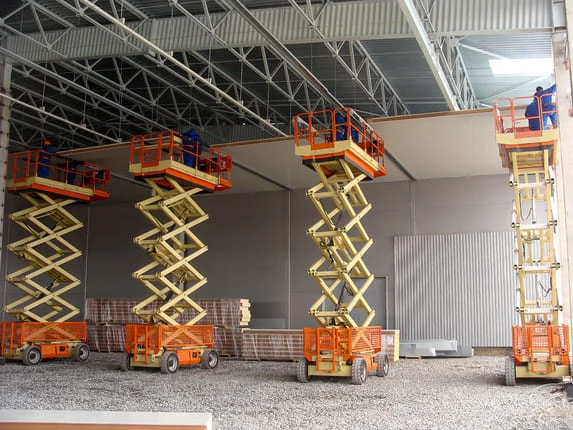
Scissor Lift in March
Request a free quote from our expert home list installation team today.At Lift Services, we provide specialist scissor lift installation services in March for a wide range of industrial, commercial, and logistics applications across the UK.
Our lifts in March are engineered for durability, precision, and safety, helping businesses move goods efficiently between heights while reducing the need for manual handling.
We design and install everything in March from compact low-profile lifts for limited spaces to heavy-duty hydraulic freight lifts capable of transporting several tonnes.
Every installation in March is carried out in compliance with LOLER (Lifting Operations and Lifting Equipment Regulations) and PUWER (Provision and Use of Work Equipment Regulations), as well as UKCA safety certification.
Request a free quote in March from our expert home list installation team today.
What Is A Scissor Lift in March?
A scissor lift in March is a mechanical lifting platform that moves vertically using a series of linked, folding supports arranged in a criss-cross pattern, known as the pantograph mechanism.
The lifting in March motion is powered by hydraulic cylinders, pneumatic actuators, or mechanical screw drives, depending on the application.
When extended, the scissor arms raise the platform to the required height, and when retracted, the platform lowers smoothly in March. This makes them ideal for environments where stable, controlled vertical movement is needed in March.
Scissor lifts in March are used in factories, warehouses, loading bays, manufacturing plants, automotive workshops, and even theatres for stage movement.
They are available as goods-only lifts in March for handling stock or freight, or as work platforms for personnel in specific maintenance or assembly roles.
What Are The Benefits Of Scissor Lift Installation in March?
Lift Services in March provides scissor lift installations that are not only robust and reliable but also fully compliant with UK regulations.
The key benefits in March of scissor lift installation include:
Faster goods movement improves operational efficiency in March
Reduced manual handling, lowering the risk of workplace injuries in March
Custom-built solutions to suit different industries and load requirements in March
Space-efficient design compared to other vertical transport options in March
Long service life with proper maintenance in March
Smooth and stable lifting to protect delicate goods in March
How Much Does Scissor Lift Installation Cost in March?
The cost of scissor lift installation is from £4,000 to £40,000+ in March.
Costs depend on size, capacity, travel height, and the features selected in March.
Small low-profile units in March are from £4,000 to £7,000.
Medium-duty warehouse lifts in March are from £7,000 to £15,000.
Heavy-duty freight lifts in March are from £15,000 to £40,000+.
Our quotes in March are fully itemised, covering equipment, installation, commissioning, and compliance documentation, with no hidden costs.
What Load Capacities Are Available in March?
Load capacity is one of the most critical factors in March in scissor lift specification.
Our installations in March range from 500 kg light-duty models for small-scale goods movement to units exceeding 20,000 kg in weight for industrial freight handling.
Light-duty is 500–1,000 kg in March, suitable for small retail backrooms, packaging areas, and assembly lines.
Medium-duty vehicles weigh 1,000–5,000 kg in March and are commonly used in warehouses, production lines, and general manufacturing settings.
Heavy-duty is typically 5,000–20,000 kg in March, commonly used in steel works, automotive plants, and large-scale distribution hubs.
During the site survey in March, we assess not just the weight of individual loads but also operational frequency, load type, and distribution on the platform to ensure safe and efficient operation over the long term.
What Safety Features Are Included in March?
Scissor lifts include a range of safety features in March to protect operators, passengers, and surrounding equipment during operation.
These features in March are essential for compliance with UK regulations and to prevent accidents in both commercial and industrial environments.
Emergency stop buttons in March are located on the platform and base controls, allowing immediate shutdown in an emergency.
Safety interlocks in March prevent the lift from operating unless all gates or doors are securely closed.
Overload protection sensors in Marchdetect if the platform exceeds its maximum load capacity and disable movement until the load is reduced.
Anti-shear guards in March and toe protection mechanisms that prevent objects or limbs from being caught between moving scissor arms or edges.
Mechanical locking devices or maintenance props in March secure the lift in place during servicing or inspection to prevent accidental movement.
Non-slip platform surfaces in March, such as textured or coated flooring, reduce slip risk, particularly in environments where oil, dust, or moisture is present.
Descent speed control or pressure relief valves in March ensure controlled lowering and prevents sudden drops in the event of hydraulic failure.
Manual lowering systems in March allows the lift to be safely lowered in the event of a power failure.
Visual and audible warning indicators in March feature flashing lights or alarms that signal when the lift is in motion or in a fault state, thereby improving awareness in busy environments.
Perimeter handrails in March or guarding (for personnel lifts) provide fall protection when the lift is used to raise people.
All safety features in March are tested before handover, and we provide complete operator training to ensure correct and compliant use in March.
What Regulations Apply To Scissor Lift Installation in March?
Scissor lifts used for goods only fall under LOLER and PUWER regulations, which require safe installation, operation, and periodic maintenance in March.
If the lift is designed to carry people in March, such as maintenance platforms, additional regulations apply, including compliance with EN 1570-1 safety standards in March and relevant fall protection requirements.
Every lift we install is UKCA-marked in March, accompanied by a Declaration of Conformity, and includes a recommended inspection schedule to ensure compliance throughout its operational life.
What Is The Installation Process in March?
The process in March begins with a site survey to assess your operational needs, space constraints, pit depth (if applicable), load types, and travel heights.
We then provide detailed technical drawings in March and an installation plan.
On-site installation in March includes assembling the lift frame, hydraulic or mechanical drive system, platform, safety features, and controls.
Once complete in March, the lift is tested under load to ensure safe and smooth operation before handover.
How Long Does Scissor Lift Installation Take in March?
Scissor lift installation in March takes between 1 and 3 weeks in March, depending on the model, site conditions, and whether civil or structural preparation is required.
Small, low-rise scissor lifts in March (e.g. for goods or vehicle access) may be installed in as little as 3–5 days, while larger scissor lifts for stage or industrial use can take 2–3 weeks.
If a concrete pit or floor reinforcement is required, additional pre-installation works (typically 1–2 weeks) in March may be needed before the lift can be positioned and fixed.
Electrical connections, safety interlocks, and control system setup add time, especially if the lift must integrate with other equipment or automation systems in March.
Once installed, the lift must undergo load testing in March, functional checks, and safety inspections in line with LOLER 1998 and PUWER 1998 regulations, which can take 1–2 days.
In schools, hospitals, or retail environments, installation may be phased or scheduled outside operational hours, which can extend the timeline in March.
Manufacturing lead times in March range from 4 to 10 weeks, depending on whether the lift is a standard model or a fully bespoke design.
What Types Of Scissor Lifts Do You Install in March?
We supply and install a wide range of scissor lift types in March to suit different operational requirements:
Low-profile scissor lifts in March – Designed for applications where pit depth is minimal or unavailable, often used for pallet handling, featuring a small ramp for easy access.
Single scissor lifts in March – The most common type, providing straightforward vertical travel for medium-height lifts.
Double or triple scissor lifts in March – Stacked mechanisms for greater travel height, ideal for reaching mezzanine floors or upper storage levels.
Heavy-duty freight scissor lifts in March – Built for industrial environments, capable of handling several tonnes of palletised or oversized goods.
Dock leveller scissor lifts in March – Installed at loading bays to bridge the height difference between delivery vehicles and warehouse floors.
Vehicle scissor lifts in March – Specially engineered for automotive workshops, MOT testing stations, and production lines.
We also offer custom-engineered solutions in March with bespoke platform dimensions, load capacities, and travel ranges to fit your exact operational needs.
Can Scissor Lifts Be Installed In Existing Buildings in March?
We regularly retrofit scissor lifts in March for use in operational sites.
Where a lift pit in March cannot be created, we can install surface-mounted low-profile lifts with ramped access.
For safety in busy areas in March, we can supply enclosed lift systems with mesh guarding and interlocked gates.
We also work in heritage and space-restricted buildings in March, designing lifts that require minimal alterations to existing structures.
Do You Provide Maintenance And Repairs in March?
We offer planned preventative maintenance contracts in March tailored to your usage level, ensuring your lift operates efficiently and remains compliant.
Our engineers in March can respond to breakdowns 24/7 and carry out on-site repairs quickly, thanks to our access to a large stock of spare parts.
Get A Free Scissor Lift Installation Quote in March
We manage the process from survey to certification in March, offer nationwide coverage, competitive pricing, and provide ongoing maintenance to maximise your investment.
Contact Lift Services in March today to schedule a complimentary site survey and receive a customised quotation. We will design and install a solution tailored to your operational needs and budget.
We cover March (Cambridgeshire)